}

The future of the young timer in the Netherlands

The young timer scheme has now become an integral part of the Dutch entrepreneurial landscape. But like many regulations in the Netherlands, this one is also under pressure, and from 2026 and 2027, the rules of the game can change dramatically.

Author:
Niels Copier

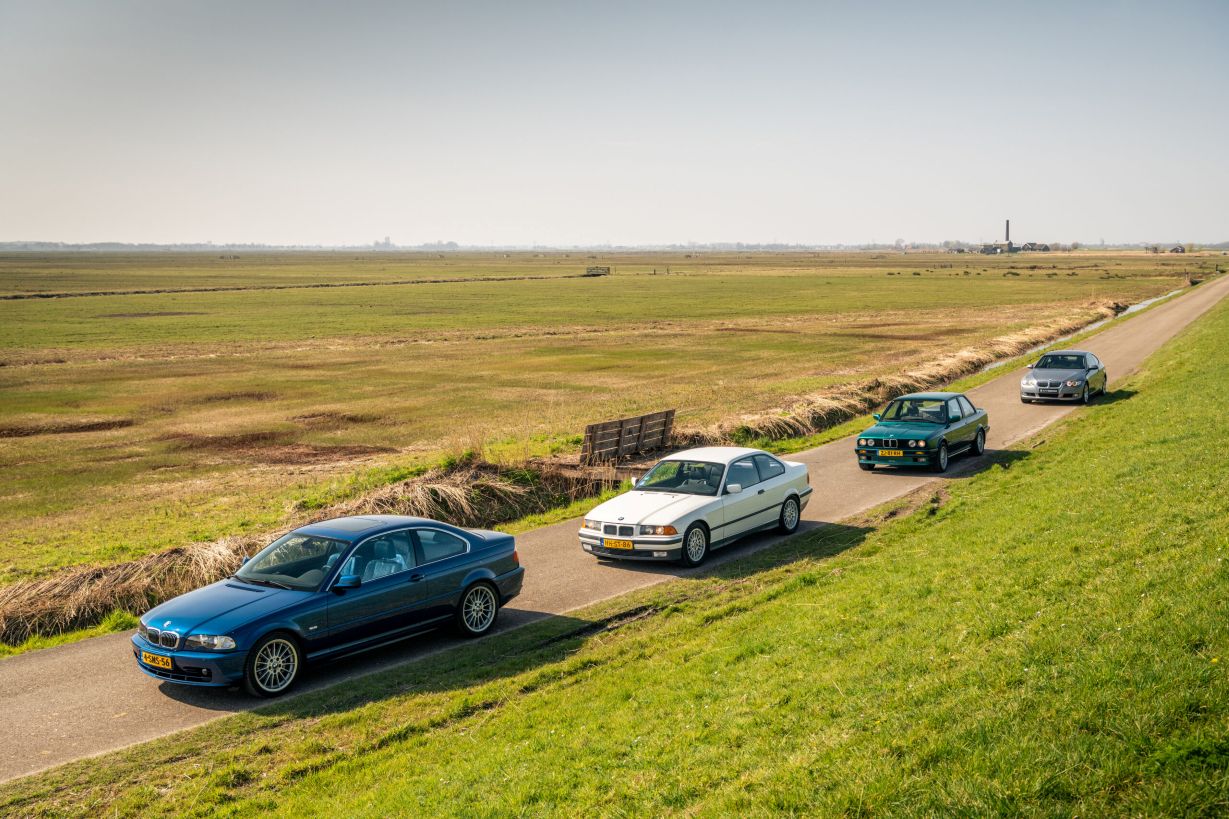
The young timer scheme has now become an integral part of the Dutch entrepreneurial landscape. What once started as a smart tax incentive to drive a car affordably has grown into a popular scheme that more than 200,000 entrepreneurs use. The principle is clear: once a car is 15 years or older, you no longer pay an addition to the original list value, but over the much lower daily value. This suddenly makes it attractive to drive a luxurious, older car, sometimes for only a few hundred euros net per month. But like many regulations in the Netherlands, this one is also under pressure, and from 2026 and 2027, the rules of the game can change dramatically.

The current youngtimer scheme

The operation of the scheme is simple and effective. For normal business cars, a 22% addition applies to the new value. For young timers, this will be 35% over the daily value, which decreases annually as the car ages. In addition, entrepreneurs can deduct almost all car costs for business: fuel, repairs, insurance, vehicle tax and more. However, there is a VAT correction of 2.7% (or 1.5% for margin cars), unless you use the flat-rate scheme where the correction is only calculated over private kilometers.

Nevertheless, the future of the youngtimer scheme is in an uncertain phase. The government wants to encourage cleaner driving and would rather see older fuel cars disappear. Large organizations such as BOVAG, RAI Vereniging, ANWB and VNA are now calling for the scheme to be abolished. A proposal to increase the addition to 45% did not make it in the House of Representatives, but it does indicate that there is political pressure on the current system. Wouter van Embden, who already played an important role in maintaining the scheme in 2008, is now working on a new proposal to gradually stop the scheme for cars built in 2010 or 2011, which would mean that fewer and fewer models will be eligible in the coming years.

Pseudo-final tax

And then there is the pseudo-final levy that should take effect from 1 January 2027. This additional tax affects all business cars with a combustion engine. For young timers, this means: 12% tax on the catalog value up to 25 years, and 12% on the market value from 25 years old. Leased cars with a combustion engine that are closed before 2027 will be postponed until 2030, but for entrepreneurs who now drive a young timer for business via their BV, this can be a considerable cost. Only self-employed persons with a one-man business are excluded.

Rising fuel prices in 2026

If fuel prices continue to rise as expected from 2026, business driving in a young timer will become even less attractive. The costs are rising, the tax advantage is disappearing and the pseudo-final tax hangs over the market like a dark cloud. The result is easy to guess: the residual value of young timers can fall sharply. Where these cars are now being bought by entrepreneurs, only the private enthusiast will soon be left, and that is a much smaller group. As a result, the market can shift considerably in a short period of time.

A critical look to the future

At Carvendo, we follow these developments with a critical eye. The Netherlands seems to be stacking more and more rules when it comes to mobility, with policies that change from year to year and rarely remain stable for long. This is disastrous for entrepreneurs, dealers, leasing companies and collectors: uncertainty inhibits investments, makes planning difficult and causes unrest throughout the industry. What is needed is clear, long-term and realistic regulations that are future-proof, not annually changing rules that mainly cause confusion.

In short: the youngtimer scheme is at a crossroads. The coming years will determine whether this fiscally attractive phenomenon will continue to exist for entrepreneurs, or whether it will slowly transform into a recreational market for private use. One thing is clear: structure, clarity and consistent policy are essential for everyone who loves to drive, and that certainly applies to the future of the young timer in the Netherlands.

Find a car ->

Andere interessante artikelen

Car margin or VAT car: what do you pay attention to when buying a used car?

Lees meer ->

Good maintenance means carefree driving

Lees meer ->

Carvendo Advice: Buying winter tires: what should you pay attention to?

Lees meer ->

How to get your car ready for winter

Lees meer ->