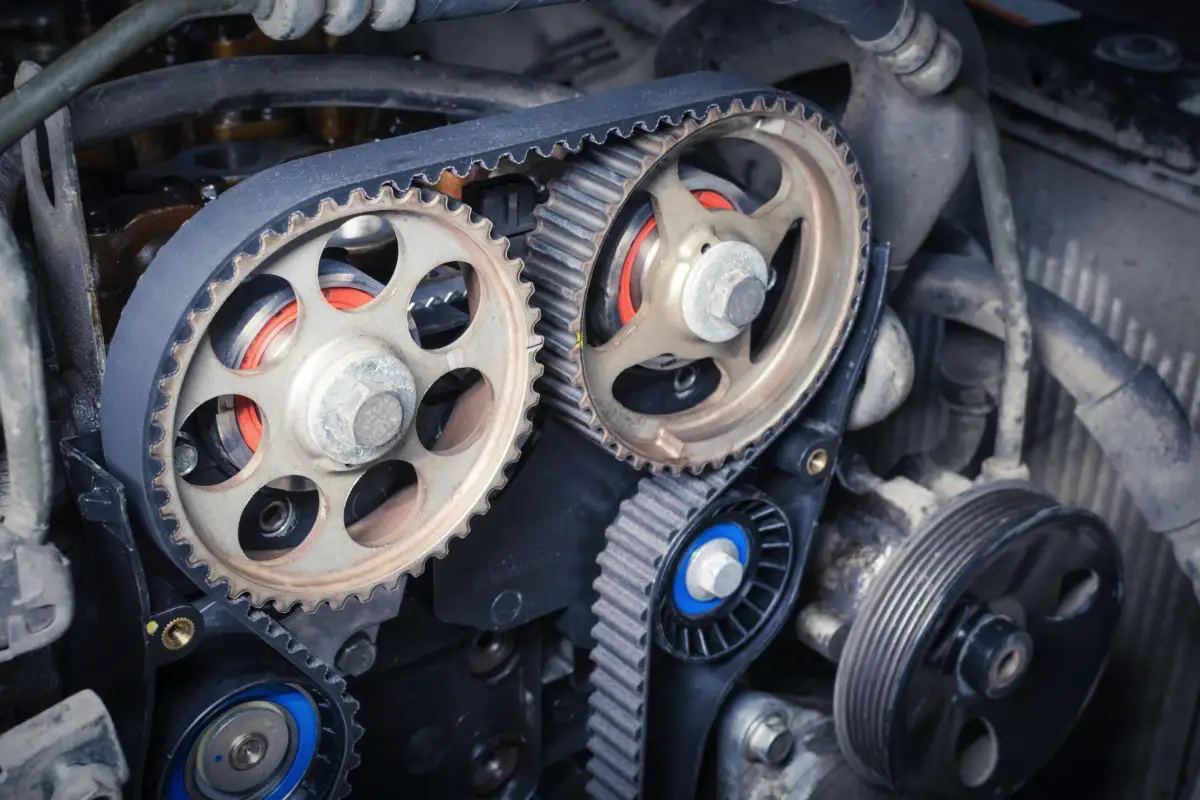
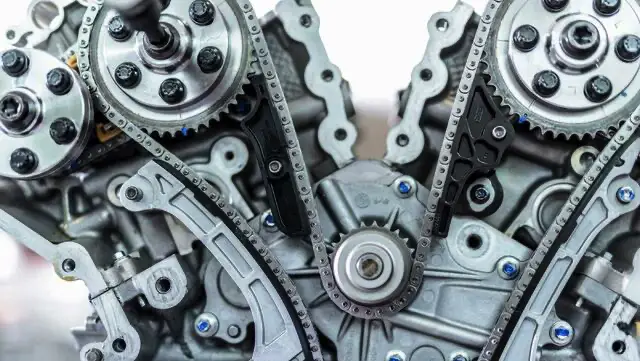
Almost every combustion engine has a timing belt or timing chain. This belt ensures that the crankshaft and camshaft work in perfect harmony, keeping the engine running smoothly. Think of it as the conductor of the engine: it makes sure all components do their job in the right order and at exactly the right moment. Without it, there's chaos under the hood and chaos means damage. When the engine is running, the timing belt is under enormous tension. It rotates with the engine's RPM and has to handle considerable force, as it synchronises the valves and pistons.
That's why it's made from reinforced rubber, often with fibreglass and a wear-resistant coating. But despite this robust construction, it's not a part that lasts the lifetime of a car. Rubber ages, materials wear, and over time the risk of breakage increases significantly. And that's exactly where the danger lies. If the timing belt snaps, the engine stops immediately. In the best case, you simply come to a halt. In the worst case, the valves and pistons collide and then you're looking at serious engine damage. We're talking thousands of euros, sometimes even more than the car is worth.
Replacing the timing belt is therefore not an unnecessary expense, but essential maintenance. Most manufacturers specify a replacement interval, usually between 60,000 and 120,000 kilometres, or every 4 to 6 years. It depends on the make, engine type and driving conditions. If you do a lot of short trips or drive under demanding conditions, it may need replacing sooner