}

Bi-directional charging: your car as a smart energy partner

Chances are, you've heard the term come up somewhere in the past few months: bidirectional charging, V2X, or simply your car as a battery. How exactly does this work and why is it becoming increasingly important?

Author:
Niels Copier

Chances are, you've heard the term come up somewhere in the past few months: bidirectional charging, V2X, or simply your car as a battery. More and more electric cars are getting this feature, manufacturers are advertising them and grid operators see it as a possible lifeline for the increasingly busy Dutch electricity grid. But what does it actually mean and why does it suddenly become so important?

A bidirectional car provides power back

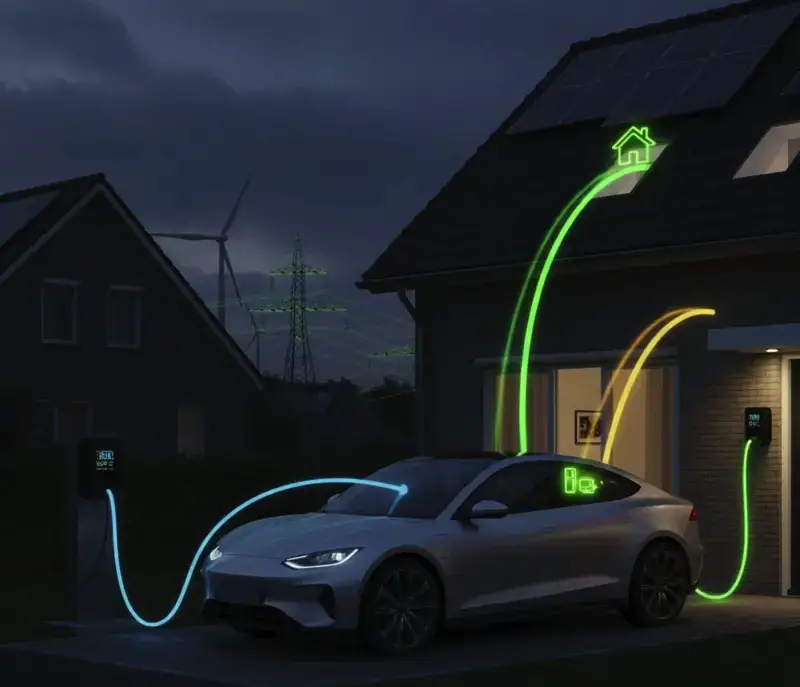
In essence, bidirectional charging is very simple. Where an electric car normally only takes power, a bidirectional car can also provide power back. This can be done to your home, to the power grid or even to devices, turning your car into a mobile battery. It opens doors to applications that, until recently, seemed almost science fiction.

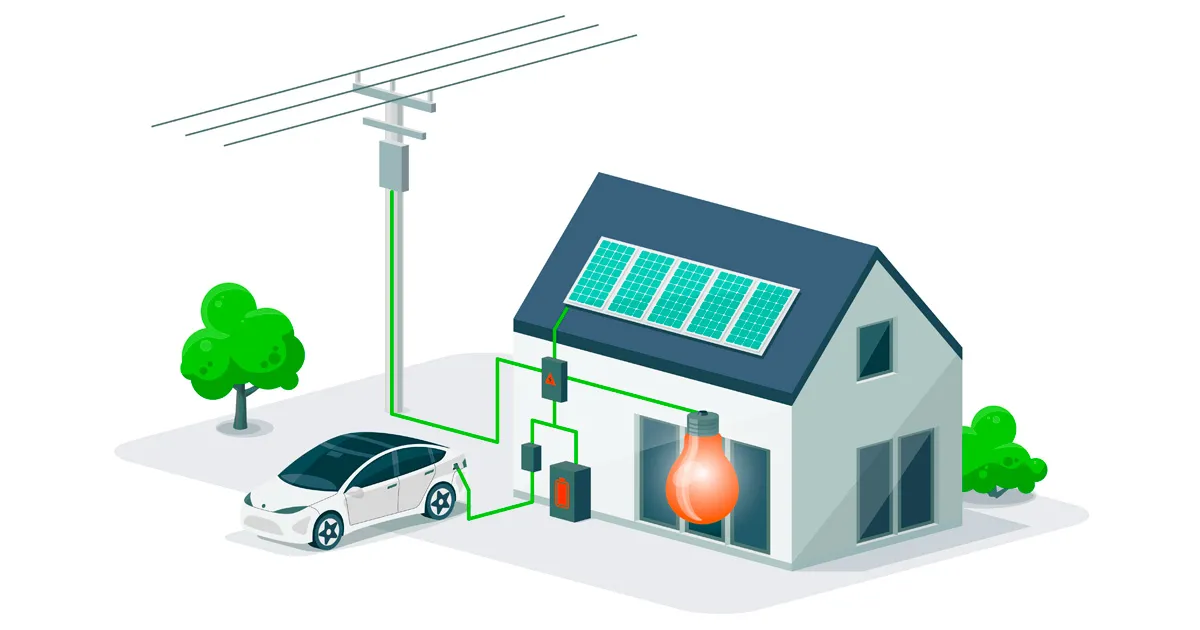
This is extra relevant for the Netherlands. Our country is leading the way when it comes to solar panels per household, while the electricity grid is already being overloaded in some places. In residential areas, solar power, heat pumps and charging stations are increasingly colliding with the boundaries of the network. Bi-directional charging can play a crucial role here. Your car can store power when it's cheap or when the sun produces the surplus, and give it back later at times of high demand. This way, your car becomes a buffer that helps keep the grid stable, a function that grid operators have dreamed of for years.

‍

Different forms of bidirectional charging

There are various forms: V2H supplies power back to your home, useful on dark winter nights; V2G provides power to the public grid, which can theoretically even make you money; and V2L turns your car into a power outlet, handy at the construction site or while camping. For Dutch households, V2H is currently the most relevant, because it connects perfectly to solar panels and dynamic energy rates.

A frequently asked question is whether this damages your battery. According to car manufacturers, the extra wear and tear is not so bad. Modern batteries are built for thousands of charge cycles, more than an average driver will ever use. Hyundai, Kia, Volvo and Mercedes indicate that the effect of bidirectional charging on the battery is negligible if the system is used correctly.

The technology is already there, but the puzzle isn't complete yet. You need a suitable car, a wallbox that supports bidirectional charging and an energy supplier that allows return delivery. In the Netherlands, these factors are slowly starting to come together, and experts expect it to increase rapidly from 2026.

‍

Look ahead when buying an electric car

It is wise to look ahead now. If you're buying an electric car soon, check if it supports bidirectional charging. Not because you'll use it immediately tomorrow, but because in a few years, this function can become as obvious as a heat pump.

In short: bidirectional charging transforms your car from a means of transport into a smart energy partner. It offers opportunities for lower energy costs, a more stable network and a sustainable future. For those who think ahead, it's smart to be prepared for this electric revolution right now.

‍

Book a free consultation ->

Andere interessante artikelen

The best way to test an electric car battery

Lees meer ->

How to buy the best used car.

Lees meer ->

Everything you need to know about the MOT

Lees meer ->

Can you still trust car reliability surveys?

Lees meer ->