Which is better E5 or E10 fuel?
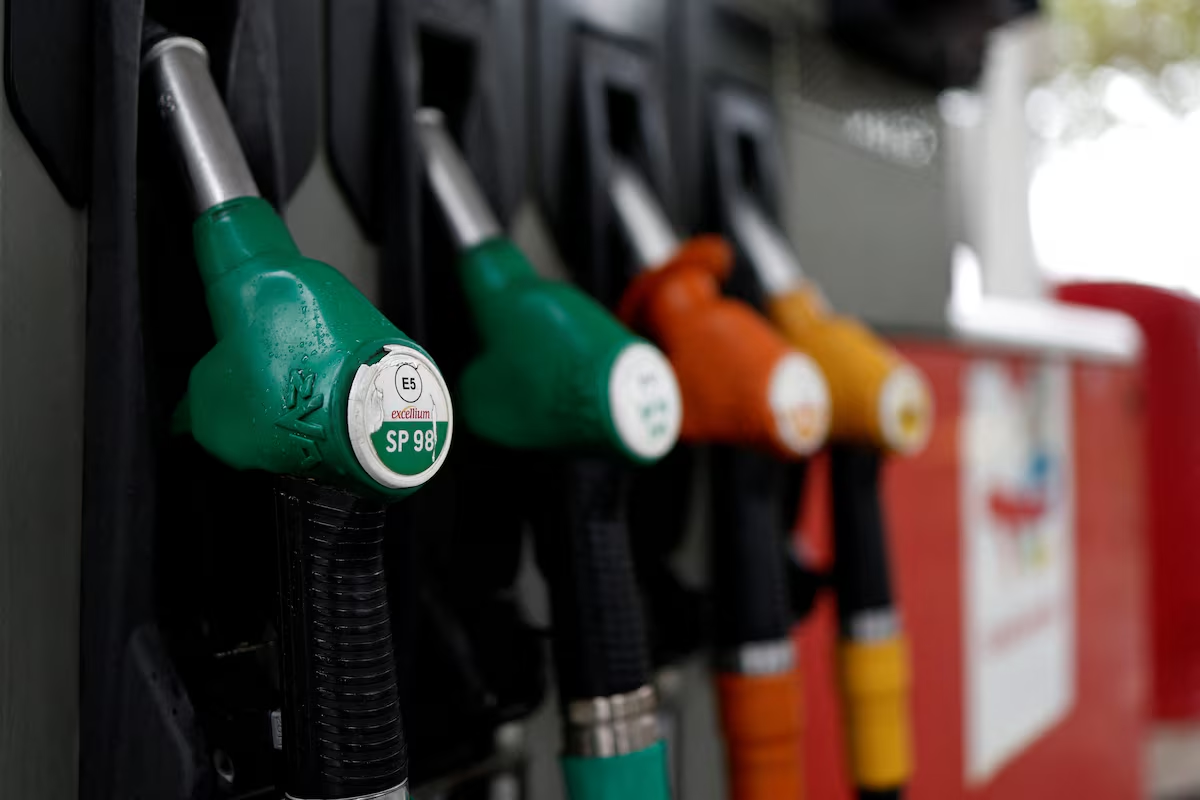
For a few years, we have been using the names E5 and E10 in Europe. This has nothing to do with the old Euro 95 or 98 anymore, but everything to do with the percentage of bioethanol in the fuel. With E10, this can be up to 10 percent; with E5, it remains limited to a maximum of 5 percent. On paper, that seems like a small difference, but in practice, you will notice it.
This bioethanol is often marketed as an environmentally friendly alternative because it comes from renewable sources such as corn and wheat. However, there is an important nuance to this. Ethanol contains less energy than gasoline, so your car simply runs less efficiently. This often means slightly higher consumption. In addition, ethanol has the property of attracting moisture, which is exactly where the disadvantages start.
For modern cars, E10 is in many cases “suitable”, but that does not automatically mean that it is also the best choice. Especially not when you look at long-term wear and tear. This is because ethanol is chemically more aggressive than pure gasoline. It can affect rubber hoses, gaskets and seals and increases the risk of contamination in the fuel system. Especially with cars that make a lot of short trips or are stationary for a longer period of time, you see that effect more quickly.
This becomes even clearer with older cars. There, E10 can eventually cause corrosion in pipes, injectors and even the tank. Engine oil can also contaminate more quickly because ethanol takes moisture into the system. You sometimes see that as a beige, milky coating under the oil cap. Not a detail to ignore, because lubrication is crucial for the longevity of your engine.
That's why E5 remains simply the better choice for many situations. Less ethanol means less moisture, fewer aggressive properties and generally cleaner combustion. Especially if you don't use your car intensively or value long-term preservation, E5 is simply quieter for technology.